Showing posts with label lebanese writer. Show all posts

Sunday, 13 March 2011

Book launch at the Abu Dhabi International Book Fair #ADIBF

It's almost time :)! I'm planning to fly on Tuesday for the launch of my novel at the Abu Dhabi International Book Fair and I’m getting all kinds of jittery.

We're also planning a signing event in Dubai. Details below for both events. Please do join us!

Abu Dhabi: Thursday, March 17th, 2011 from 5-8pm at Ciel Stand (Hall 12, L18), Abu Dhabi International Book Fair, Abu Dhabi National Exhibition Center (ADNEC)

Dubai: Friday, March 18th, 2011 from 3pm-6pm at Kitsch Cupcakes, Gate Building, Marble Walk, Dubai International Financial Center (DIFC).

Wednesday, 7 July 2010

My laywoman's review of "The Locust and The Bird, My Mother's Story" by Hanan Al Shaykh


There can’t a bigger statement of daughterly love and forgiveness than penning down the tale of the mother who abandoned you as a child to run off with her lover. Yet that’s exactly what Hanan Al Shaykh did in this book, writing her mother’s true story in the first narrative, a translucent, fearless and unrepentant voice. This is the story of a woman born to poverty in the early 20th century south Lebanon, abandoned by her father and given off by her own mother as a child bride to her dead sister’s husband.

But this girl (Camila) is no loser and the book tells the story of her triumphant spirit. At a time where girls are expected to be grateful for the food and shelter their family provided them, Camila tears off her wedding dress and daubs her face with soot to show her resentment against her forced marriage. She sneaks to the cinema where films give her much needed escapism and help her overcome her illiteracy by teaching her about romance and passion. The love of her life, the much better educated Mohammed, serenades her during their illicit encounters in the orchards of Aley and even at his family’s home only a few blocks from the house she shares with her husband, kids, mother, siblings and nephews.

Eventually, Camila leaves her two daughters and husband to marry Mohammed, and has more children with him. His career goes well as an internal security officer, but like many great love stories this one is destined for a tragic end: Mohammed dies in a car accident. But Camila doesn’t give up. She travels the world visiting her children in Kuwait and the US and turns her living room in Beirut into a social salon, a “psychiatrist’s couch” as Hanan Al Shaykh puts it.

I cried my eyes out at the end, when Camila’s sad yet inspiring life comes to an end. Not only was her particular story touching, but it also told of the Lebanon that my grandparents talk about. Their way of life, their difficulties and the struggle of so many women who came before us and to whom we owe so much. A beautiful, highly recommended read.

Saturday, 26 June 2010

SATC and the Arab/Moslem woman

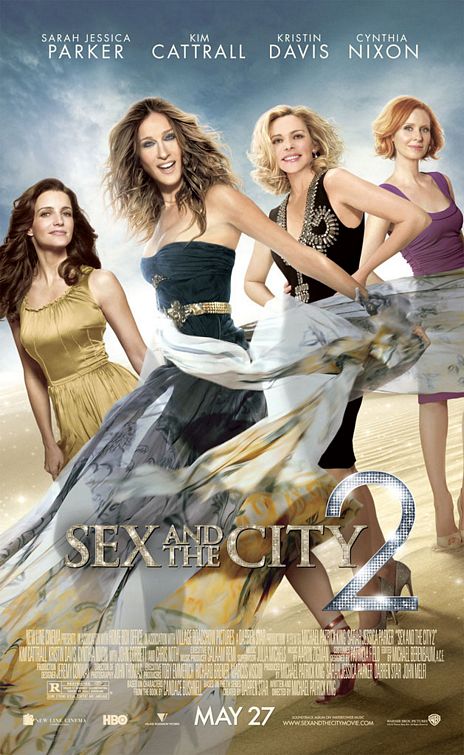
Another day and another opinion piece on the film Sex And The City2. By now, we’ve read everything from Andrew O’ Hagan’s  “this is the most stupid thing I’ve seen all year” in London’s Evening Standard to US commentators’ “fashion fascism” reviews and my latest read: an opinion piece by Wajahat Ali, a Muslim American writer, branding the movie “imperialistic” and an insult to Muslim women.

All of these reviews make valid points that echo many people’s thoughts, but at the same time, isn’t this a little too easy? ( and I’m talking here in specific about Wajahat’s opinion). Jumping to call this movie an insult to Muslim women and putting the world “imperialist” against it because it’s American is by itself a bigger cliché than anything in that movie.

As a Lebanese Muslim woman who has spent more than 13 years in the UAE and Kuwait (and loved every minute of it); I did feel the bite of the SATC ladies’ criticism of my culture, but I cannot say that it’s unfounded. Sure, not all of us are silenced or hidden behind veils but many are, and we need to accept that other cultures will have an opinion just like we have an opinion on their way of life.

Yes, SATC2 producers could have done their homework better: they used wrong colloquial as UAE dialect (as well as Hindi and Punjabi as Wajahat pointed out), missed important wardrobe details etc, but to me taking Carrie and Co - the symbol of glamorous strong western women- to the UAE and having them compare themselves to Moslem/Arab women is by itself a good thing: a debate opener and the fact that we (Arab/Moslem) women, and definitely the UAE ARE on the international map and here to stay. If we have to take a bit of criticism as we carve a bigger niche for ourselves in the global consciousness, so be it. If we’re smart, we can use this visibility as a platform to tell people more about ourselves and break down the fear that extremists on both sides have built.

A big thing for me were Carrie’s remarks about the woman in the “modern” Abaya + her VO when the women in the souk take off their clothes and “hundreds of years of tradition”  to reveal “this season’s Louis Vuitton” collection. I see why this sentence launched a thousand “fashion fascism” comments, but the positive undertone is right there: beyond the shallow layers, we have a lot more in common than meets the eye.

And let’s not forget: this is only a movie, a comedy and those who’ve ever watched the series or the first film know that the franchise can be accused of stigmatizing everyone, especially manhanites.